


If you recognize foot fungus at the initial stage and start treatment on time, there is a high probability of a quick recovery with a minimal amount of antifungal drugs, which for the most part pose a danger to health (especially the liver) during long-term use.Unfortunately, not always and not everyone is able to respond in time to the first signs of the appearance of a fungal infection, since the symptoms at the initial stage are very similar to harmless skin manifestations.You know the feeling when you find a yellow spot on your toenail and the first thoughts that come to mind are: nothing, I'll cut it off, a healthy, clean nail will grow back, or I hit myself somewhere, it will go away soon.Or a slight peeling appears in the interdigital folds, which in 90% is attributed to dry skin and is treated with moisturizing creams.But behind all these “harmless” manifestations, the familiar and hated foot fungus is most often hidden.
Provoking factors and sources of infection
Pregnancy can cause the development of fungal diseases, as during this period a woman may experience a marked decrease in immunity and hormonal imbalance.
Foot fungus, like many diseases, cannot develop on its own;a favorable environment is necessary for its appearance and progression.There are several factors and concomitant diseases that provoke the appearance of this disease:
- a sharp decrease in immunity;
- lack or violation of personal hygiene;
- increased sweating;
- diabetes mellitus;
- obesity;
- flat feet;
- vascular diseases of the lower extremities;
- constant abrasions and wounds;
- surgical interventions, etc.
We have listed the most popular causes of foot fungus, but even an inadequate diet or prolonged use of antibiotics can also cause the development of mycoses.
Infection most often occurs after wearing a sick person's shoes or visiting public showers.In recent years, there has also been a rapid increase in the spread of mycoses through manicure devices.Other sources of infection include:
- personal hygiene products for sick people (loofah, pumice stone);
- things of an infected person (socks, stockings, shoes, slippers, pants);
- flooring (mainly wooden) in bathtubs, showers, gyms.
The agents that cause foot fungus are very resistant to the environment and differ in that they can remain latent for a long time in wood, towels and socks.The period of exacerbation is spring and autumn.
How to recognize foot fungus at the initial stage?
Here, experienced dermatologists recommend paying attention not only to external signs, but also to internal ones.Have you ever noticed that everyone goes to the bathhouse, the pool, sunbathe on the beach, but the fungus only affects some people?The fact is that its development requires a favorable environment - reduced body resistance.This condition can occur in the presence of concomitant diseases or recent medical treatments during which antibiotics or hormonal medications were used.
Now let's talk about the manifestation of fungus on the skin of the feet.The main symptoms include:
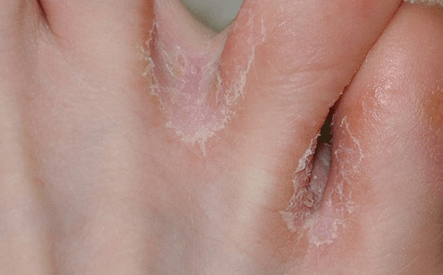
- fissures in the interdigital folds;
- peeling between the fingers;
- hardening of the skin on the heels;
- the skin on the feet and fingers peels;
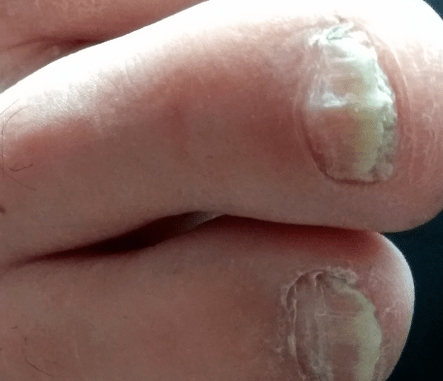
- deformation of the nail plates (thickening or thinning);
- change in nail color (yellow, brown, black);
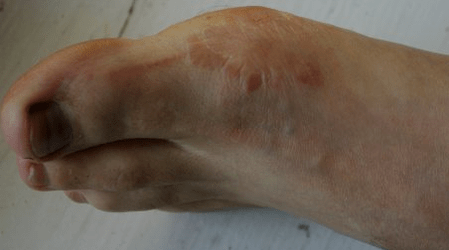
- redness and swelling of the feet;
- the appearance of red spots on the thighs and inner part of the legs;
- scales over the entire surface of the foot;
- itching of varying intensity (depending on location and pathogen);
- unpleasant odor (most often observed in people who suffer from excessive sweating).
In deep mycoses, blisters, crusts and fissures may appear, accompanied by severe itching and pain.In some cases, the lesions are located in places where, due to the intense pain, it is impossible to stand on the leg.This can lead to temporary disability and mobility problems.
Varieties and classification
As you already know, mycoses can be caused by different pathogens, based on this the location of the lesions can vary.Most often, foot fungus can be caused by:
- dermatomycoses;
- mycoses due to candidosis;
- deep mycoses.
All foot mycoses today are considered independent diseases, caused by different pathogens and localized in various areas of the legs, but they are all united by one name - foot fungus.The most common of them:
- Rubrofitiya stop.It is responsible for approximately 60% of all foot mycoses.It is highly contagious and prevalent among certain segments of the population.The initial stage of rubromikoza of the feet is characterized by lesions between the toes and folds on the toes.Subsequently, the sole and the inside of the foot are involved in the process.Damage to nail plastic with rubrofitii is observed in every third patient.Often combined with fungus on the hands, especially with generalized rubromycosis.
- Epidermomycosis.These include two distinct diseases - Epidermophytiya of the feet and Epidermophytiya of the inguinal-femoral folds.In both cases, the lesions are located on the legs.Epidermophytia of the feet is characterized by lesions in the folds between the toes, soles and dorsum of the foot.Less commonly, the process spreads to the nails (usually the 5th and 1st toes).The lesions are covered with scales and crusts.There is itching of varying intensity.In acute cases, general malaise and headache may occur.Inguinal epidermophytiya appears as large scaly patches on the groin, inner legs, thighs and perianal region.The lesions can reach the size of a large patch and are accompanied by mild itching, peeling and swelling.
- Onychomycosis.The prevalence of fungal nail infections is steadily increasing every year.Only now (according to statistics from mid-2016) 10-18% of Russians are diagnosed with nail onychomycosis of varying severity.Environmental and social factors play a big role in its development.People with problems with the vascular, immune and endocrine systems are also at risk.Men get sick 1.3 times more often than women.Onychomycosis is very rare in children, with a peak prevalence in people between 50 and 70 years old.
- Candidiasis.Rarely, but there are still cases of foot lesions caused by Candida fungi.In isolated cases, Candida balanoposthitis can spread from the genitals to the perianal region and inguinal-femoral folds.A little more often, yeast-like fungi are found on the nails.At the initial stage, there is pain in the nail fold, and when pressed, pus may be released.Over time, its color acquires a brownish-brown hue.
There are also smooth skin rubrofitiya, but lesions are rarely found on the legs.But rubromikozu in the groin is characterized by damage to the inner part of the leg with red spots.
Treatment and prevention
Diagnosis of fungus on the legs includes examining the clinical picture, taking scrapings from the lesions, performing a microscopic examination (finding threads of mycelium) and bacterial culture to determine the fungal culture.Before consulting a doctor, do not treat the injuries in any way!Differential diagnosis is made with eczema, rashes and contact dermatitis.
Treatment of Epidermofitii and rubrofitii in the groin is carried out with external medicines (most often Clotrimazole).The prognosis is positive, the duration of treatment rarely exceeds one month.As a preventive measure, it is recommended to treat lesions with alcohol-containing solutions;if there is itching, antihistamines may be prescribed.
The situation is more complicated with foot mycoses and onychomycosis, as even in the initial phase they are very difficult to treat and are subject to recurrence.The most effective is considered to be a combination of external and systemic medications, strict adherence to dosage rules, personal hygiene and disinfection.The combination of Diflucan in capsules and terbinafine in ointment form has been shown to be effective (treatment of lesions twice a day for one month).When dealing with foot fungus, much attention is paid to treating shoes and socks, which can cause relapses.It is advisable to boil socks or wash them at a temperature of 90 degrees;insoles and shoes from the inside must be treated with chlorhexidine solution.
And most importantly, remember that today foot fungus, detected at the initial stage, can be successfully treated with the help of modern medicines, but advanced onychomycosis and foot mycosis can take months and even years to treat.